




Contact Customer Service (812) 867-2800
1
of
11
Loading...
SKU:
082045032710
JCS Wildlife Double-Wide Large Poly Lumber and Pine Mason Bee House - Handmade in the USA
$133.96
Unit price
/
Unavailable
JCS Wildlife Double-Wide Large Poly Lumber and Pine Mason Bee House - Handmade in the USA is backordered and will ship as soon as it is back in stock.
FREE SHIPPING! ORDERS RECEIVED BEFORE 12PM CST SHIP SAME BUSINESS DAY!

JCS Wildlife Double-Wide Large Poly Lumber and Pine Mason Bee House...
$133.96
Unit price
/
Unavailable
Description
Description
Product Overview
This beautiful double-wide hand-made Bee House from JCs Wildlife is crafted from durable recycled poly lumber with stainless steel screws and routed edges. It will not crack, split, fade, or stain, and the UV-protected colors remain vibrant for years. Inside are 16 removable charred-pine panels that create ideal nesting chambers for mason bees and make seasonal cleaning simple. The charred pine provides a natural scent that attracts bees and creates a cozy nesting environment. Made in the USA.
This house attracts mason, orchard, leaf-cutter, aphid, and carpenter bees. Mount it on a post or building using the included hardware, facing East or Southeast so bees can warm up in the morning sun. Install 3–5 feet above ground and away from pesticide use. Bees will naturally locate the house without assistance.
Spring
When temperatures reach about 55°F, adult mason bees emerge, mate, and begin searching for nesting sites. Females lay eggs through late spring. Have your bee house installed before emergence.
Summer
Eggs hatch within about a week. Larvae feed on stored pollen and nectar, then spin cocoons in late June. No external activity is visible during this time. Do not disturb the house.
Fall
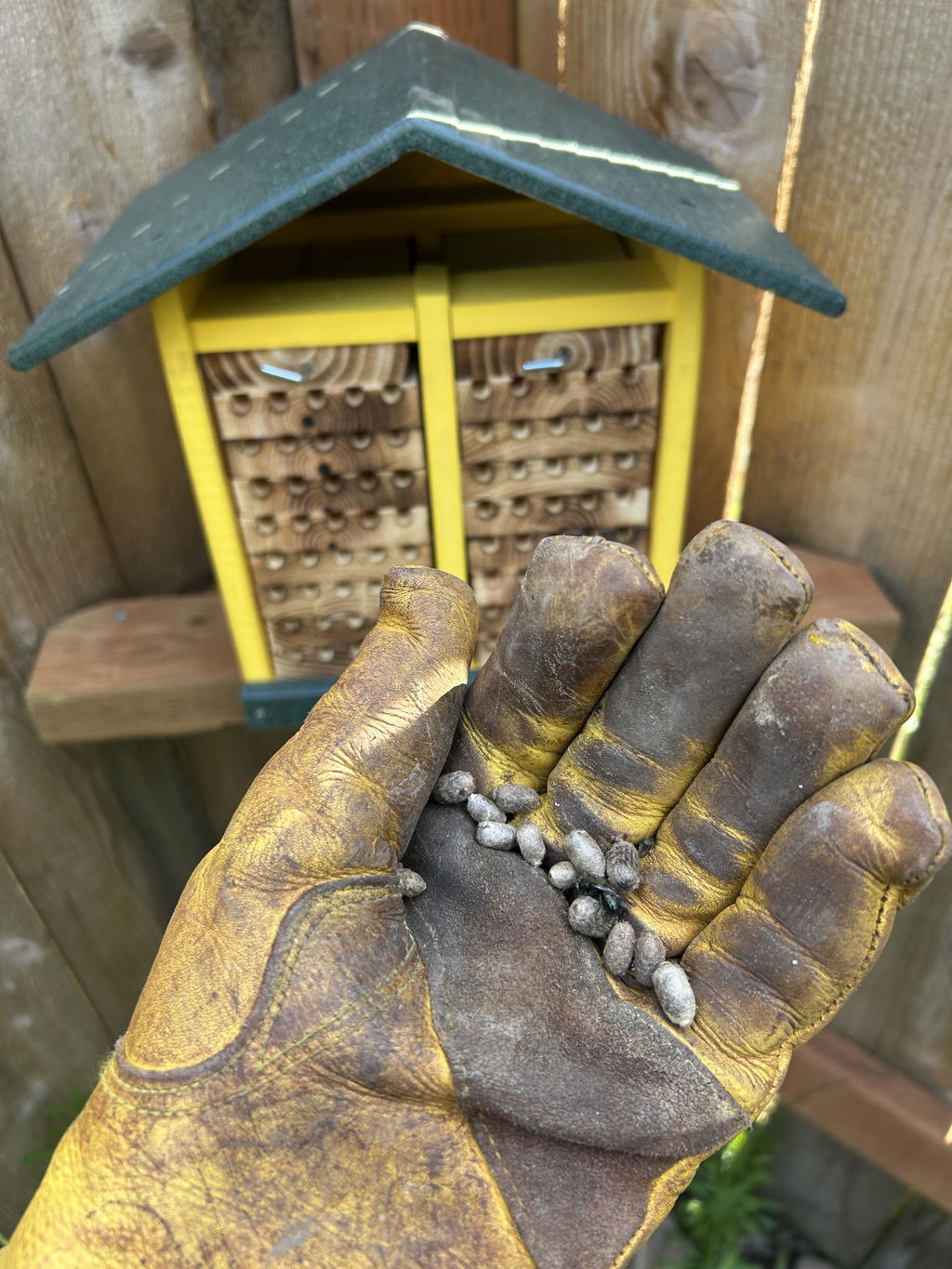
In October, remove the panels to inspect the cocoons. Each nesting channel may contain up to 8 cocoons. Carefully remove them and store them in a container in the refrigerator.
Winter
Cocoons remain dormant for about six months, either in the refrigerator or left in the house. Clean all nesting slots thoroughly before spring.
Next Spring
When temperatures reach about 57°F for several days, place the cocoons outside in a protective container with a small exit hole. Adults will emerge and begin the cycle again. For regional timing and species information, consult your local extension office.
Mason Bee Fun Facts
- Mason bees are 30–60 times more effective pollinators than honey bees.
- One female mason bee equals the pollination power of about 100 honey bees.
- Adults live only 3–6 weeks.
- They use mud to build walls between cocoons.
- Six mason bees can pollinate a fruit tree.
- A female visits about 75 flowers per trip and may need 35 trips per larva.
- They only use natural or man-made holes.
- A single bee may visit up to 2,400 flowers per day.
- Mason bees are gentle and safe for children to observe.
- They pollinate over 90% of the flowers they visit.
- Males emerge first in spring.
- Their foraging range is about 100 yards.
- One female can lay up to 36 eggs and chooses the sex of each one.
- Mason bees are native to North America.
- They use scent to locate their specific nesting hole.
Payment & Security
Shop with confidence. Your payment information is processed securely. We do not store credit card details nor have access to your credit card information.